

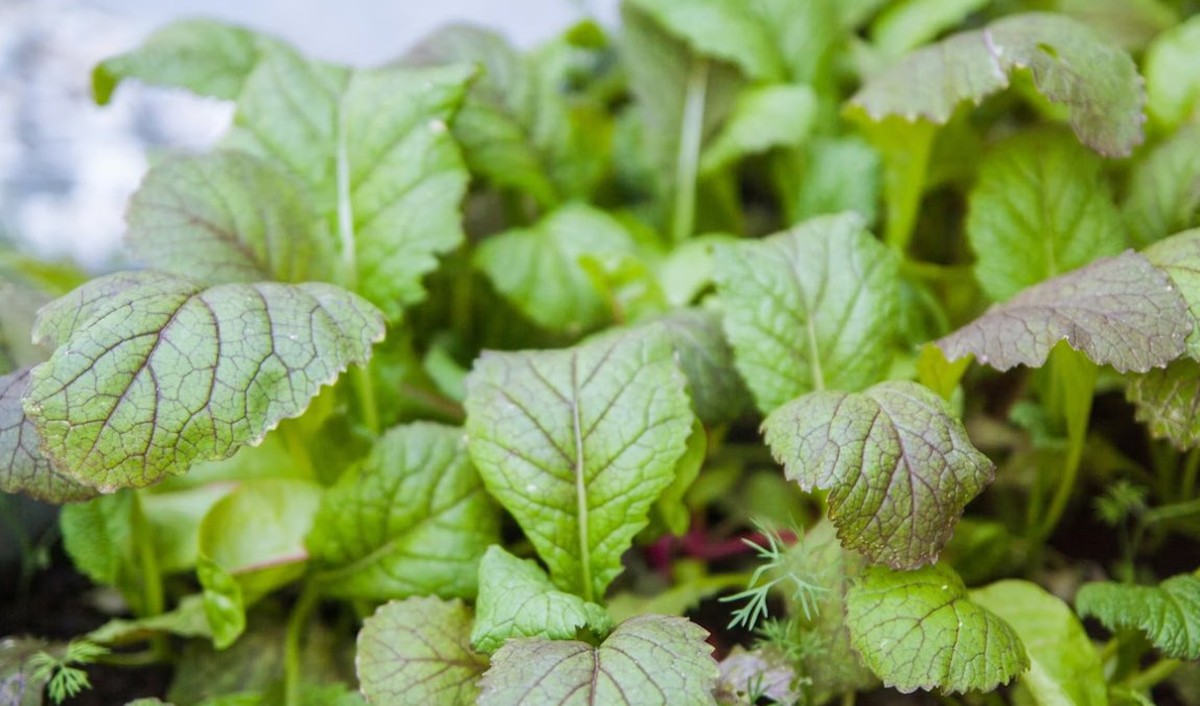
Mustard greens — grow them! eat them! I place mustards in the “miracle plant” category due to their taste, their ability to grow in cold conditions, their beauty, and their general appeal at the Farmer’s Market.
They are the first thing I sow in the spring and the last crop I plant in the fall. Cold hardy? Hells ya! I left one bed completely exposed all last winter and they are now producing new growth for early spring salads. Even kale doesn’t manage that every year!
A Nutritional Powerhouse
If taste is not enough for you, consider this: mustard greens contain very high amounts of vitamins A, K and E as well as calcium and iron. They also contain high levels of flavonoids, which are potent antioxidants — think cancer-fighting.
A Season-by-Season Guide
The first warm days of late winter bring incremental growth to overwintering beds of mustards. By mid-spring we are regaled by an avalanche of spicy reds, greens and purples in an assortment of gorgeous leaf shapes. Varieties sport evocative names: Tat soi, Mizuna, Tokyo bekana, Red dragon, Ruby streaks, Komatsuna.
As summer approaches it is difficult to keep up with the growth rate of mustards, and their spiciness peaks. They flower quickly in a beautiful burst of yellow blooms, which make a sweet and colourful addition to salads. This rapid tendency to bolt makes growing mustards in summer tricky — but that’s okay, because by then our palates are ready for the velvety sweetness of lettuces anyway.
In early fall we may once again return to our cool-loving friends: mustards!
— Cam MacDonald is a market gardener and sometime writer living in the Cowichan Valley.