

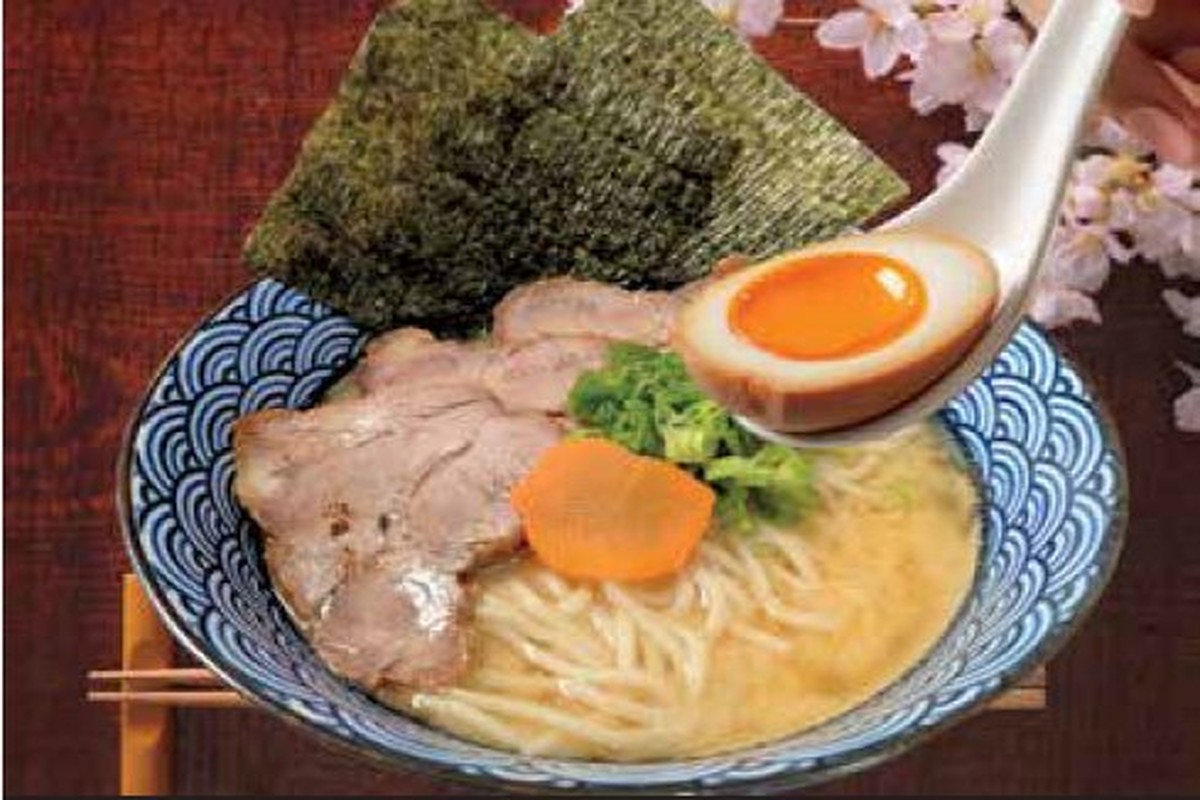
Spring has arrived. It is the season of Easter. Eggs are loved in Japan as well, but in a very different way. Instead of pastel-coloured shells or chocolate treats, one of Japan’s most beloved eggs sits quietly on top of a steaming bowl of ramen.
Do you know Ajitama?
If you have ever eaten ramen in Japan, you may have noticed a beautifully cut egg resting on the noodles. This is called ajitama, short for ajitsuke tamago, which simply means “seasoned egg.”
At first glance it may look like an ordinary boiled egg. But look a little closer and you will notice something special. The egg white has a gentle brown tint from soy sauce, and the yolk inside is golden and slightly soft.
The egg is marinated in a mixture of soy sauce, mirin, and sometimes broth, allowing the flavour to slowly soak into it. For many ramen lovers, ajitama is not just a topping — it is one of the highlights of the bowl.
For many ramen lovers, ajitama is not just a topping — it is one of the highlights of the bowl.
Perfect egg obsession in Japan
Japan has a long-standing fascination with the perfect egg texture. While hard-boiled eggs are common in Western cooking, Japanese cuisine often celebrates eggs that are soft, delicate, and silky.
You can see this throughout Japanese food culture. There is onsen tamago (hot spring eggs) with gently set whites, tamago kake gohan (raw egg over hot rice), and custardy steamed egg dishes such as chawanmushi. Ramen eggs fall somewhere in between — firm enough to hold their shape, but with a rich, creamy yolk.
Achieving that balance requires careful timing. Just a minute too long in boiling water can turn the yolk solid. Because of this, ramen chefs pay surprisingly close attention to something that seems as simple as boiling an egg.
Why ramen eggs are marinated
One of the defining features of ajitama is that it is marinated rather than simply salted or topped with sauce.
In many Western dishes, flavour is added on the surface through sauces or dressings. Japanese cooking often takes a different approach. Instead of covering ingredients, it allows flavours to slowly soak into them.
After being cooked and peeled, the eggs are gently placed in a mixture of soy sauce, mirin, and sometimes dashi broth. Over several hours, the seasoning gradually penetrates the egg white, creating a delicate savoury flavour that pairs beautifully with ramen soup.
This idea — allowing flavour to infuse into the ingredient itself — is a hallmark of Japanese cooking.
Every ramen shop has its own egg
Another fascinating aspect of ramen eggs is that every ramen shop prepares them a little differently. Some restaurants marinate their eggs in a simple soy sauce mixture, while others use broth from their ramen soup. Some prefer a slightly sweeter flavour, while others create a deeper savoury taste. Even the softness of the yolk can vary from shop to shop.
In the world of ramen, the egg — like the broth and the noodles — helps express the personality of the shop.
Colourful Easter eggs and savoury ramen eggs may look very different, but both bring a little joy to spring — one hidden in the garden, the other waiting in a warm bowl of ramen.
Neko Ramen · 171 Canada Avenue, downtown Duncan