

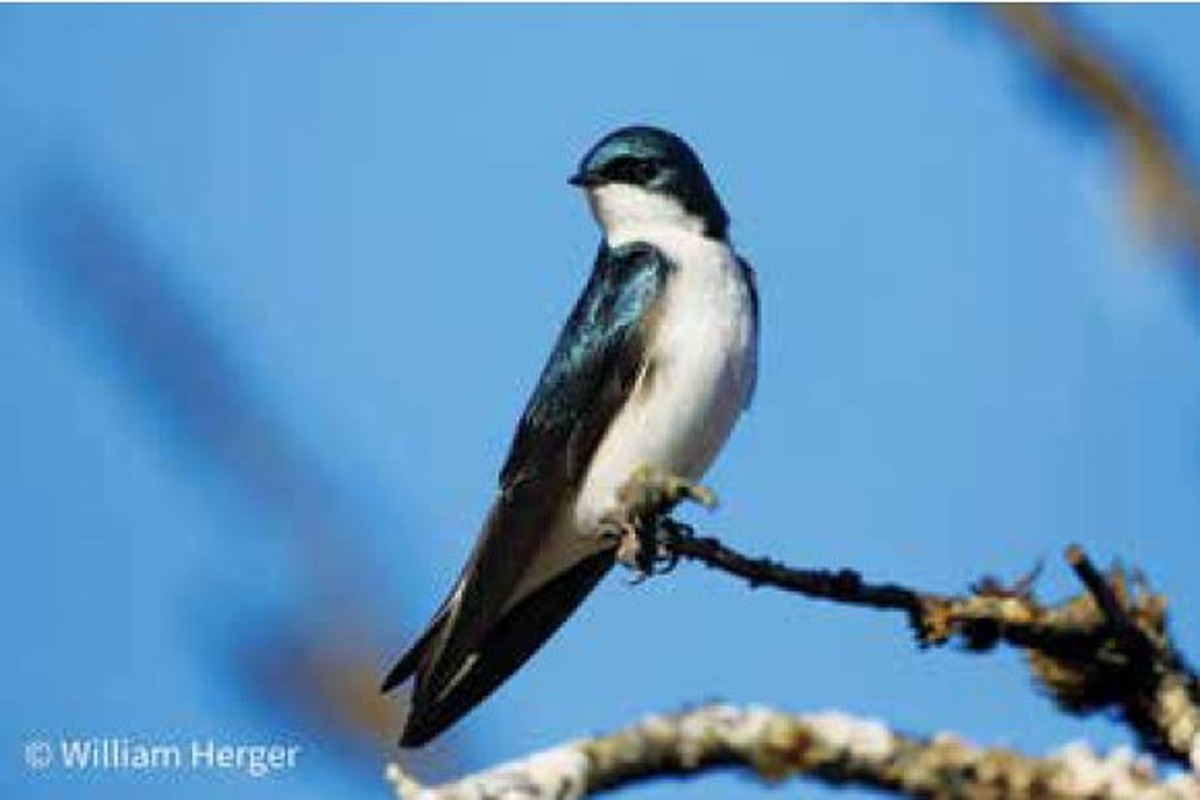

Somenos Marsh provides the perfect habitat for swallows to raise their young, but these cavity-nesting birds need our help. Access to natural nesting sites continues to disappear due to urban development and habitat loss — this is why nest boxes are so important.
The appearance of tree swallows in late February foretells the arrival of spring, a symbol of rebirth. Their arrival invites a connection with nature which cannot fail to boost our spirits and our sense of wellbeing.
Remarkable Little Birds
Tree swallows build beautiful nests lined with grass and feathers. They typically lay between 3 and 5 eggs which incubate for 13 to 17 days. If the food supply (flying insects) and weather is favourable, an adult pair may lay a second clutch of eggs. The babies fledge after about 18 days.
Tree swallows are the first to arrive in the valley, but violet greens, rough-winged and barn swallows also visit. Competition for nest boxes from other cavity-nesting birds can be intense, and on occasion introduced species like the house sparrow may take over a nest, killing the nesting birds.
74 Nest Boxes at Somenos Marsh
There are currently 74 nest boxes in and around the marsh — some visible at the Open Air Classroom parking lot, numbered boxes lining the boardwalk, and more in the fields along the dyke. Five boxes are large and hung high in trees to provide homes for owls.
Nest boxes require maintenance every fall. Volunteers — including students from the Environmental Stewardship Program at Quw’utsun Secondary School — clean, repair, and replace boxes as needed.
Annual Nest Box Art Auction
Many esteemed local artists, including well-known indigenous artists and the famous Robert Bateman, donate their time and skill to decorate nest boxes for an annual auction in October. Proceeds support the ongoing work at Somenos Marsh.
Get involved: somenosmarsh.com
This article originally appeared in the Cowichan Valley Voice Magazine, April 2026 Issue 209.