

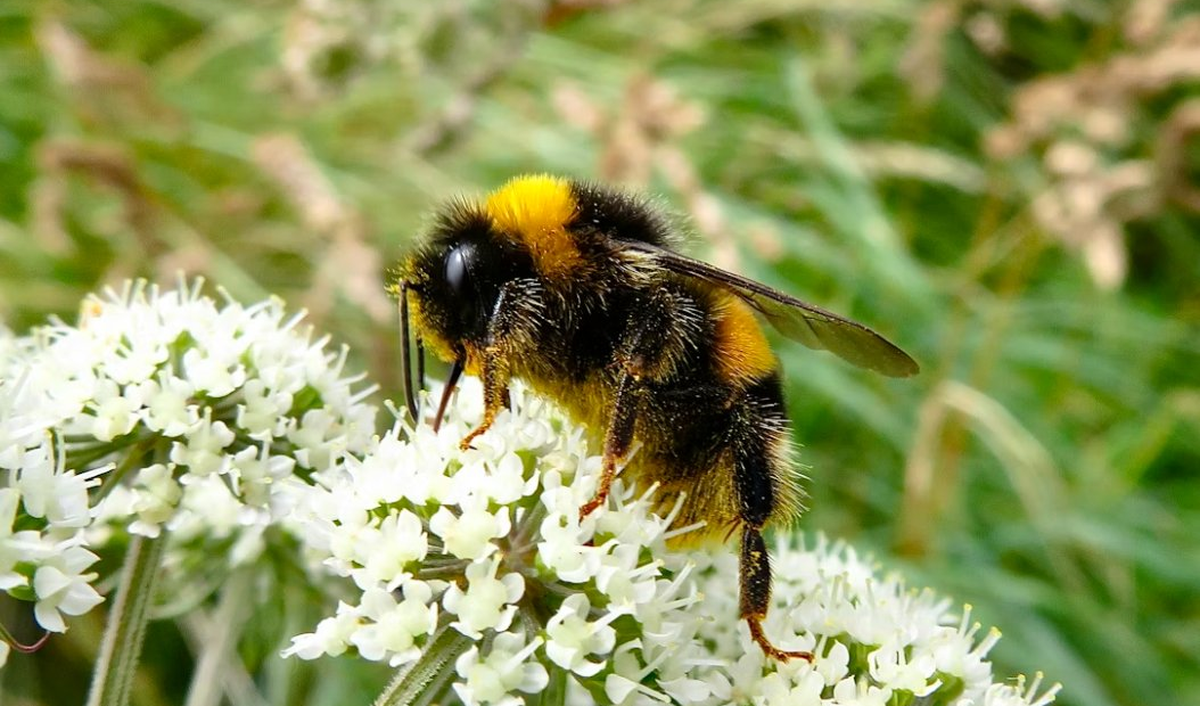
For ten thousand years, the most effective pollinator of small berries in the Cowichan Valley has been our 14 species of wild bumblebees. They are superbly adapted to do this because they:
- Pack large pollen loads and have long forage distance capacity, flying fast
- Fly from sun up to sun down, including in cool and cloudy weather
- Employ unique buzz pollination behaviour, which is essential for the pollination of blueberries, cranberries, tomatoes and other native plants
A Threatened Partnership
Bumblebees co-evolved with our native flowering plants, but habitat fragmentation has taken its toll. Native flowers are not as common as they once were, and as a result, the existence of bumblebees and solitary bees is threatened. The existing habitat fragments do not have the nectar and pollen producing capacity that bees depend on.
Re-introducing native and ornamental plant gardens focused on nectar and pollen production is where the action needs to be. Native flowers are disappearing from the landscape even though solitary native bees and bumblebees still desperately need them.
What Is Sustaining Them Now
Fortunately, our fading wild bumblebees are currently being sustained by commercial crops like blueberries, cranberries, fruit trees and raspberry family crops, as well as well-planned bumblebee gardens, farm hedgerows and border strips. There is no going back to the blue fields of camas — so if you have these, protect them.
The good news is that research worldwide, especially in the UK, shows that gardens and bumblebee-designed hedgerows can sustain bumblebee populations. If we invest in bumblebee-friendly landscapes in urban centres and the rural countryside, we can bring back all the native bees — including our wild bumblebees.
Three Habitats Bumblebees Must Have
What is certain is that the three habitats bumblebees need are disappearing fast due to unconscious land development:
- North-facing slopes — for winter hibernation
- Warm slopes — for nesting
- Abundant sources of nectar and pollen — for feeding throughout the season
Bumblebees coming to blueberry and cranberry fields are likely nesting within one kilometer of the field. Bumbles need overwintering hibernation sites for mated queens, as bumblebee nests are annual. In the spring, queens emerge from hibernation and find nesting sites to raise the few hundred worker bumblebees — and the male and virgin female bees that will carry the species through to the next year.
Habitat protection that allows bumblebees to overwinter and nest successfully is therefore essential to sustaining our small fruit food production.
The Feeding Gap After Crop Bloom
To keep bumblebees around, they need to be fed adequately after crops bloom through March to late April. In the past, farms grew acres of clover on whole fields that would feed bumblebees after they pollinated the economic crops. Now, farms are disappearing — taking this source of nectar and pollen away from all species of bees.
The main reason for bee decline is the loss of nectar and pollen production across the whole landscape. Natural systems like our Garry Oak Reserves are covered by up to 85% bee-pollinated, nectar and pollen producing plants. The challenge is to cover our gardens and hedgerows with a similar 85% of bee-pollinated plants.
Since native habitat is scarce and highly disconnected, native flowers can no longer feed native bees adequately. This underlines an urgent need to install a network of bumblebee gardens to feed bumblebees after the bloom of the crops.
— Ted Leischner, Plan Bee Now!, Duncan